
Social, emotional, and behavioral skills in students with specific learning disabilities

…and beyond

Tommaso Feraco

11/02/2025

Background

Specific learning disabilities (SLD)

SLDs are a class of neurodevelopmental disorders characterized by difficulties in acquiring foundational academic skills in reading, spelling, writing, and/or math1

  • Dislexya
  • Discalculia
  • Dysgraphia

These have lifelong consequences on learning, occupational, and social outcomes2.

Achievement

Non-cognitive aspects of SLD

For what concerns school, they also impact36:

  • Attitudes toward school
  • Self-esteem
  • Motivation
  • Achievement emotions
  • Study strategies
  • Well-being

Achievement

Non-cognitive aspects of SLD

For what concerns school, they also impact36:

  • Attitudes toward school
  • Self-esteem
  • Motivation
  • Achievement emotions
  • Study strategies
  • Well-being

Possibly generating a vicious cycle:

Achievement

Are there students’ characteristics that may sustain them all?

Social, emotional, and behavioral (soft) skills

These represent the abilities to establish and maintain social relationships, regulate emotions, and effectively manage behaviors toward goals and learning and mainly fall into five areas7,8:

  • Self-management skills
  • Social engagement skills
  • Cooperation skills
  • Innovation skills
  • Emotional resilience skills

Social, emotional, and behavioral (soft) skills

Many national and international organizations and institutions think so912 and label these as “soft skills”, “socio-emotional skills”, “life skills” …

Useful for

  • Academic achievement
  • Relationships
  • Social issues
  • Well-being
  • Employment

SEB skills and SLDs: bridging strengths and weaknesses

  • Individuals from atypical populations might particularly benefit from these skills to face their life challenges and adapt to their distinctive characteristics1315
    • Students with SLDs may rely more on non-learning skills to face their daily challenges at school
    • They could also try to develop them more to succeed in scholastic and non-scholastic contexts
  • Thus, interventions that promote skills development and focus on individual strengths can lead to more comprehensive outcomes for students with SLD
  • But there is scarce and unstructured research on the topic, adopting varying frameworks and measurements3,1618

Study 1 & Study 2

Feraco et al. (2025), Learning and Individual Differences.

Aims & hypotheses

AIMS & HYPOTHESES

  • Aim 1: Identify the SEB profile of SLDs students:
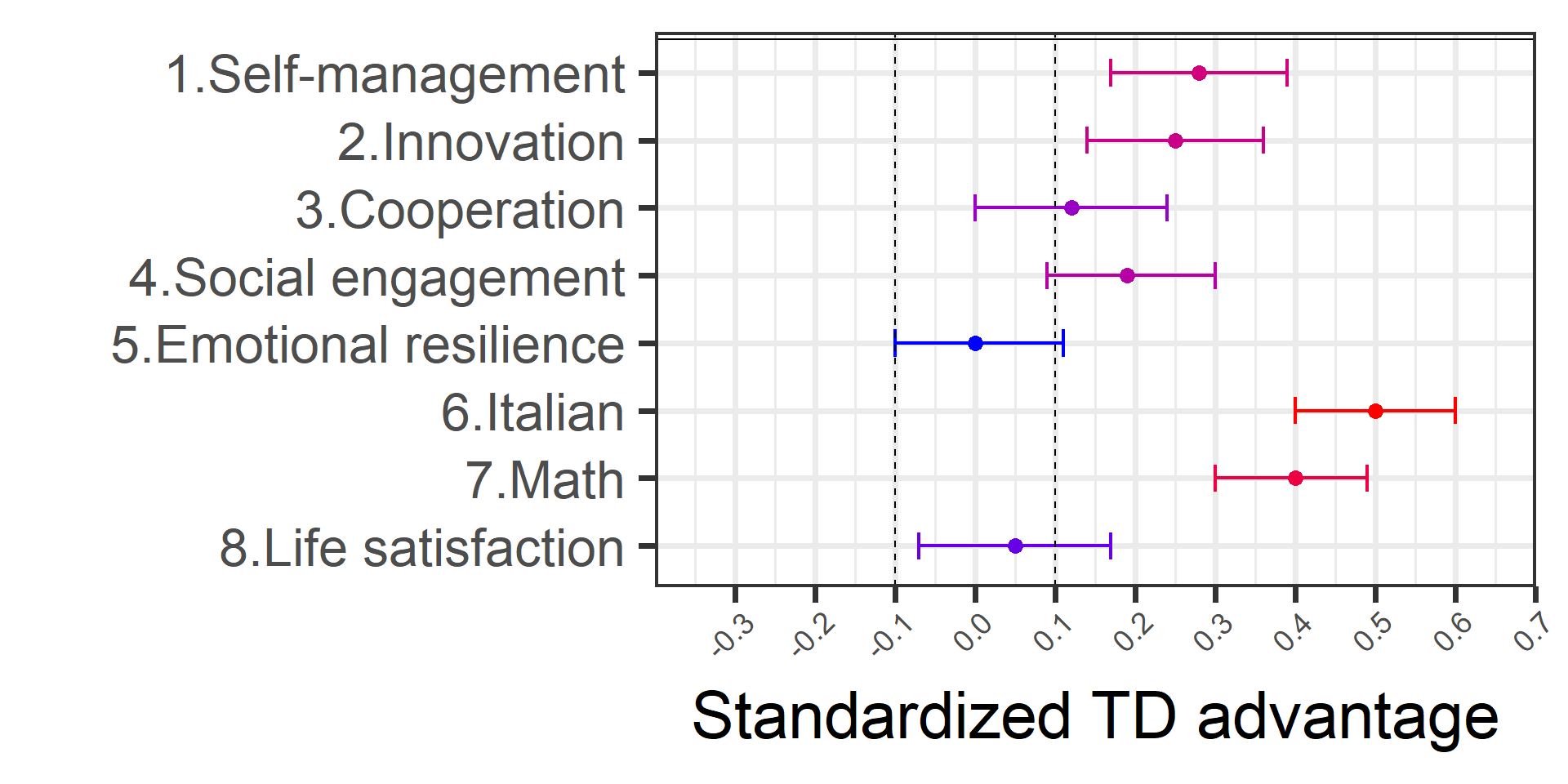
    • H1.1: Lower self-management skills19
    • H1.2: Lower social engagement and cooperation skills20
    • H1.3: Lower emotional resilience skills21
    • H1.4: Similar or higher innovation skills22
  • Aim 2: Test the differential impact of SEB skills
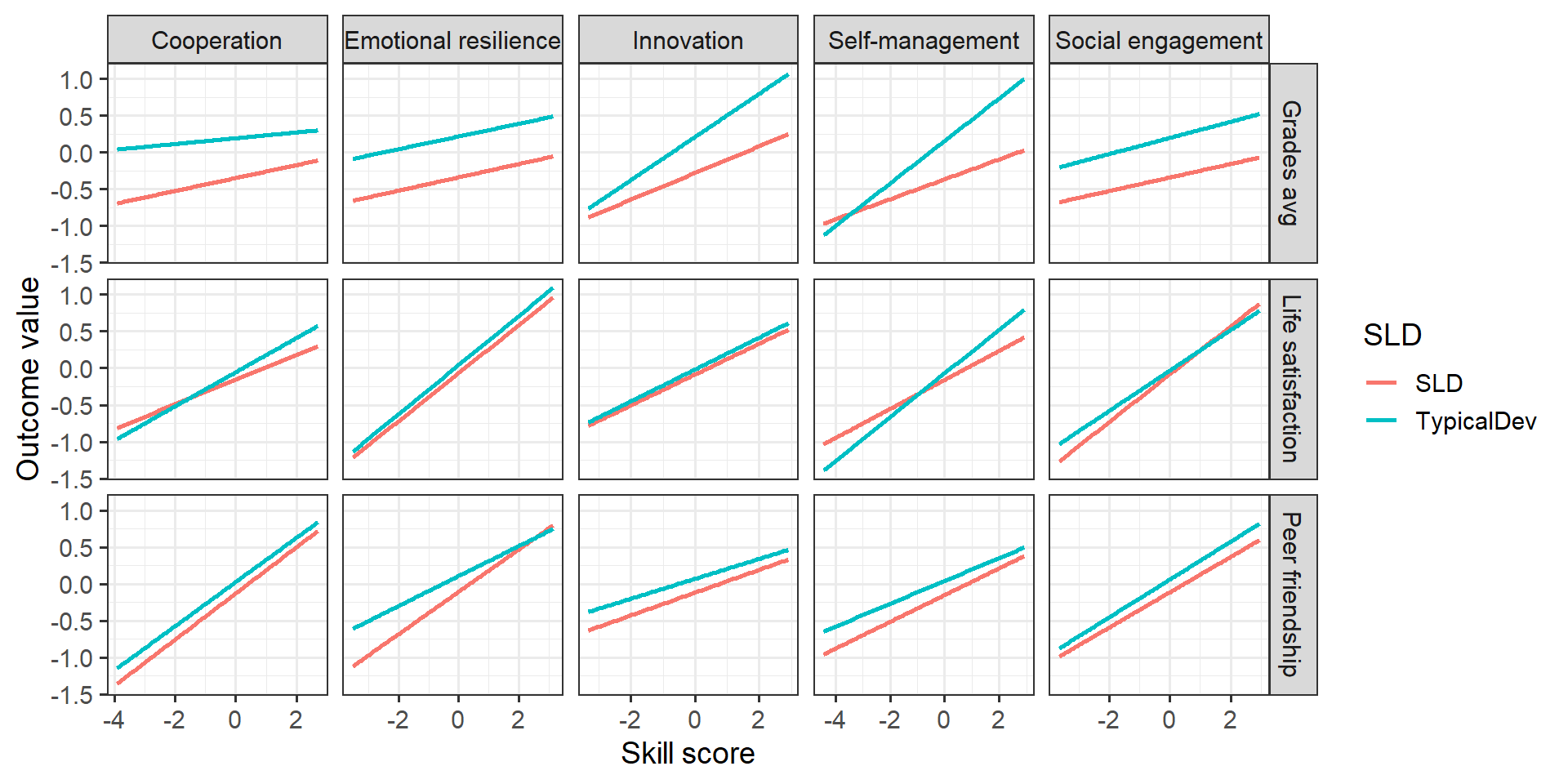
    • H2.1: SEB skills predict academic achievement more in students with SLDs
    • H2.2: SEB skills predict non-academic outcomes similarly in the two populations23.

AIMS & HYPOTHESES24

  • Aim 1: Replicate mean-level differences results:
    • H1.1: Lower self-management skills
    • H1.2: Lower social engagement and slightly lower cooperation skills
    • H1.3: Similar emotional resilience skills
    • H1.4: Lower innovation skills
  • Aim 2: Replicate interaction effects
    • H2.1: SEB skills predict academic achievement more in students without SLDs
    • H2.2: SEB skills predict non-academic outcomes similarly in the two populations

Participants & materials

STUDY 1 Participants

  • 2965 participants
    • 359 with SLDs (169 females)
    • 2606 without SLDs (1420 females)

Materials

  • SEB skills: BESSI-19225 (Italian version)
  • Life satisfaction scale26
  • Academic achievement: average grades in Italian and Math

STUDY 2 Participants

  • 5075 (valid) participants
    • 243 with SLDs (112 females)
    • 4832 without SLDs (2649 females)

Materials

  • SEB skills: BESSI-4525 (Italian version)
  • SRL factors: AMOS27
  • Peer relationships28
  • Life satisfaction scale26
  • Academic achievement: average grades
Responses where screened for careless responding using multiple detection methods. MG-CFA were conducted before testing group differences. These showed that the latent constructs are similarly mapped by the BESSI in the two groups.

SEB profile

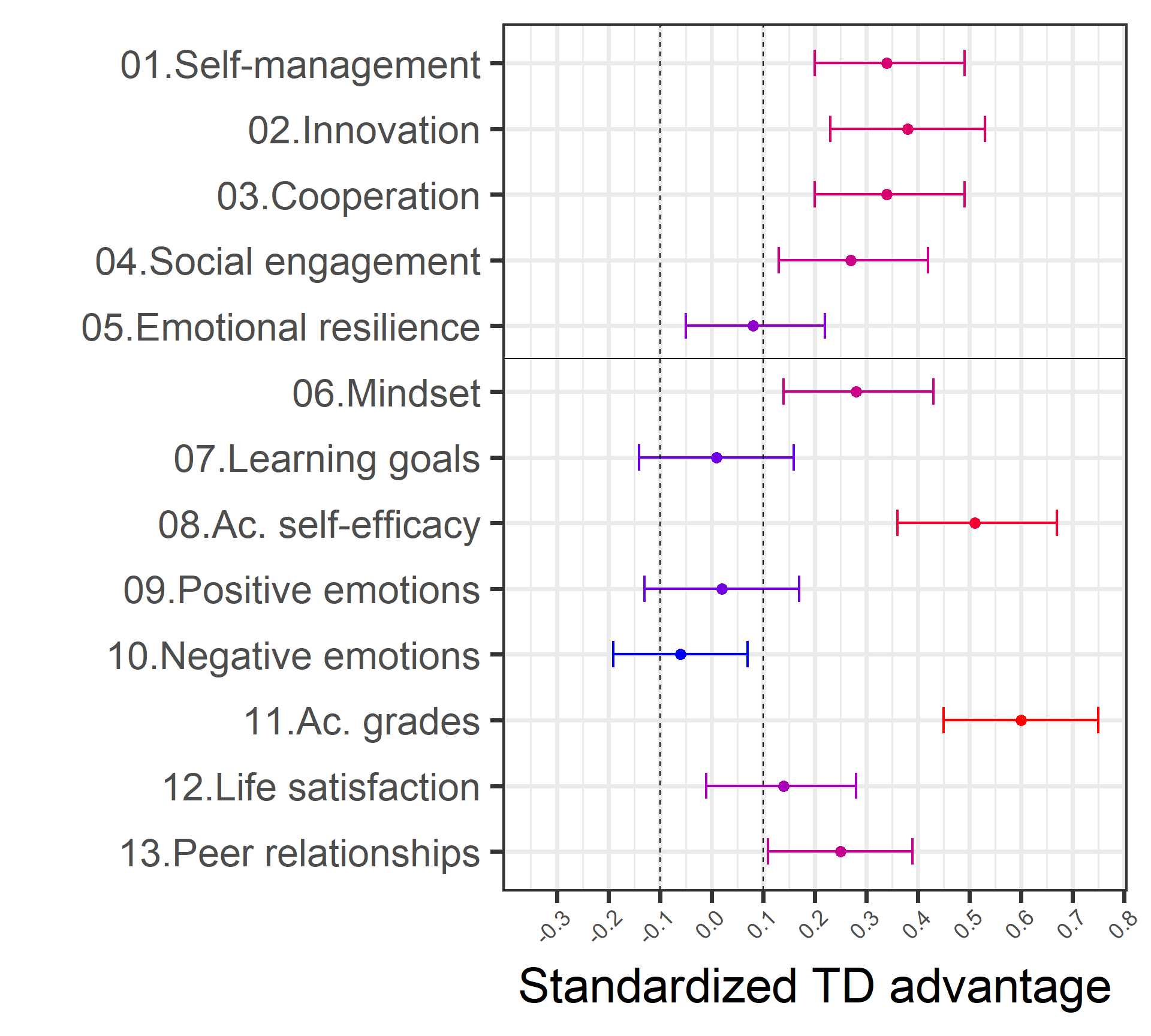
Mean-level group differences

STUDY 1: Total sample

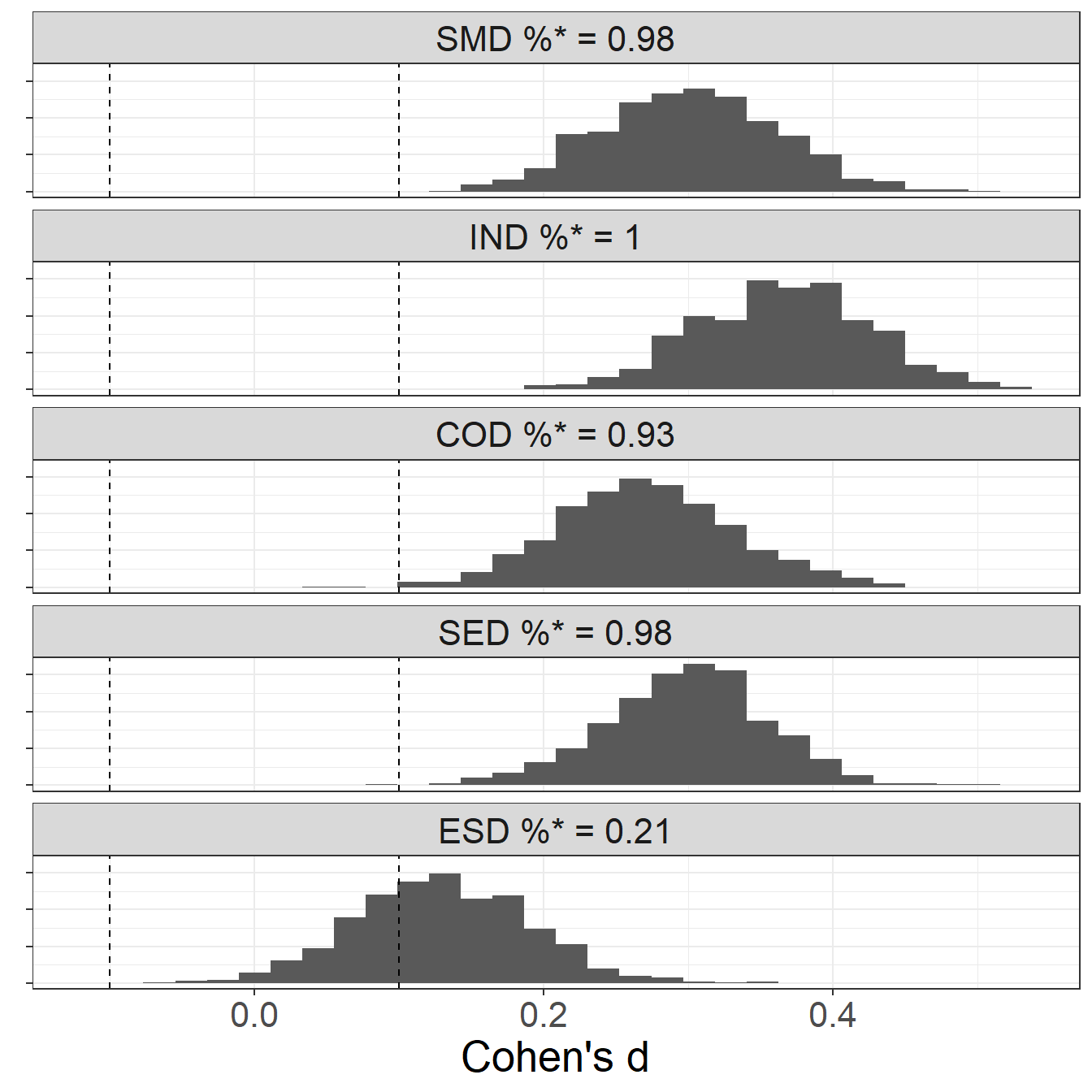
Results were also replicated on 10,000 matched samples, confirming the general effect.

STUDY 2: Total sample

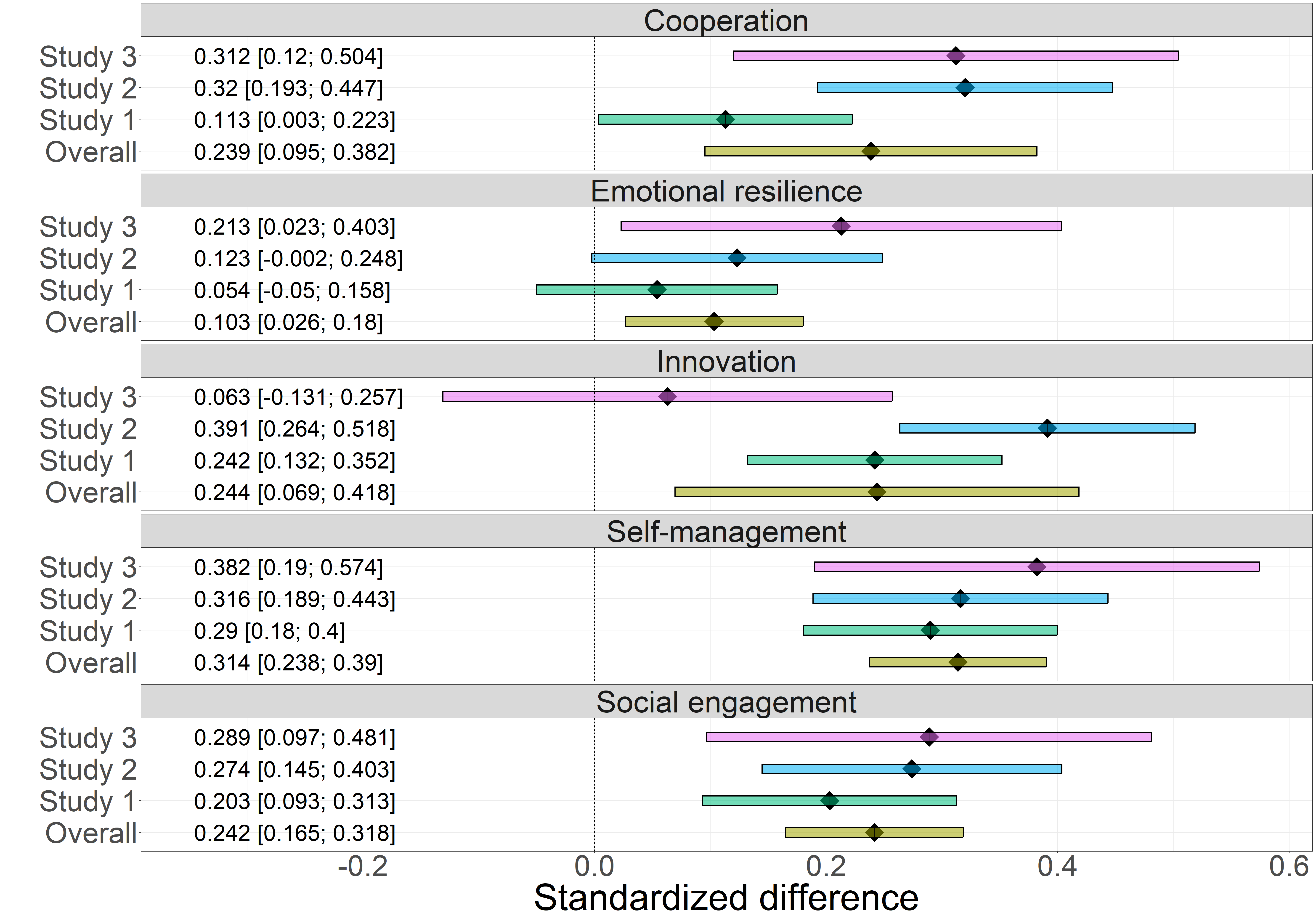
Meta-analytical summary

INCLUDING: a similar third study in University students.

  • Study 3 (under review)
    • 752 participants (SLD: 125)
    • Wider scope but here only group differences are presented

Thanks to Gerardo Pellegrino

SEB ‘use’

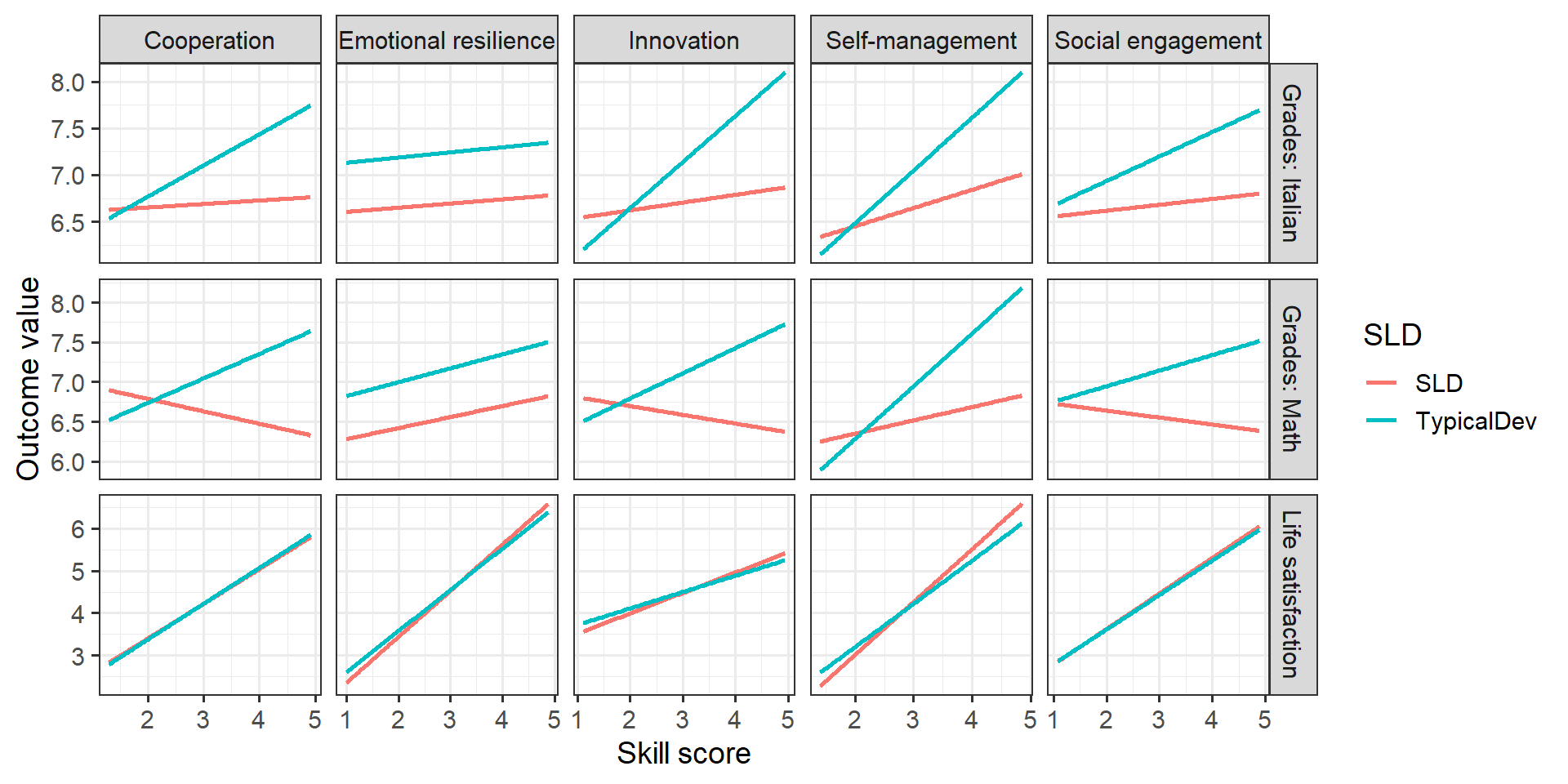
Interaction effects (Study 1)

Interaction effects (replication)
Conclusions & Discussions

SEB profile

Students with SLDs consistently report lower (perceived) SEB skills

  • Stigma, learning failures and difficulties may impact students’ perceived abilities beyond the school context21,24
  • Failing to acknowledge these differences could limit our comprehension of SLDs and have long-term consequences for students with SLDs
  • Future studies should tackle this question and eventually expand the analyses to specific kind of learning disabilities
  • In general, the results highlight the importance of extending the comprehension of non-cognitive factors in SLDs.

SEB ‘use’

Students with SLDs appear to use such skills inefficiently for school-related success, but they show similar correlations with general and peer relationships satisaction

  • It may be beneficial to expand interventions to promote knowledge and efficient use of individual strengths3,13,16
    • More comprehensive outcomes for students with and without SLDs
    • Lower need of self-disclosure
  • But future studies are needed to understand the reasons why we find these differences.

But do people (and students) want to change their skills?

A brief dive into volitional change goals

Three international preregistered experimental studies (and a grant from EAPP) on traits and skills change goals

  • AIMS: Explore students’ skills change goals and associated beliefs and compare them to traits
  • METHOD: Experimental manipulation of skills and traits definition and items
  • SAMPLES:
    • Study 1: 126 US and 139 Italian university students [under review].
    • Study 2: 200+ Italian university students [ongoing].
    • Study 3: 700 High school students, parents and teachers [just started]
    • Grant:
      • Study 4: 450 Italian, German, and Mexican participants
      • Study 5: 390 Italian, German, and Mexican

Christopher J. Soto

Nathan W. Hudson

Hayley K. Jach

Future directions

  • Continue with skills change goals research (EAPP grant just won)
  • Continue working on SEB skills measurement
  • Start planning and conducting skills interventions and volitional change interventions
  • And much more (including another grant on Geographical Psychology)
Chiara Meneghetti Barbara Carretti Gerardo Pellegrino Christopher J. Soto Nathan W. Hudson Nicole Casali Hayley K. Jach Tobias Ebert

References

1.
Association, A. P. Diagnostic and Statistical Manual of Mental Disorders (DSM-5-TR). (American Psychiatric Association, 2022).
2.
Deshler, D. D. Adolescents with learning disabilities: Unique challenges and reasons for hope. Learning Disability Quarterly 28, 122–124 (2005).
3.
Casali, N. et al. Academic Achievement and Satisfaction Among University Students With Specific Learning Disabilities: The Roles of Soft Skills and Study-Related Factors. Journal of Learning Disabilities 00222194221150786 (2023) doi:10.1177/00222194221150786.
4.
5.
6.
Mortimore, T. & Crozier, W. R. Dyslexia and difficulties with study skills in higher education. Studies in Higher Education 31, 235–251 (2006).
7.
Soto, C. J., Napolitano, C. M. & Roberts, B. W. Taking Skills Seriously: Toward an Integrative Model and Agenda for Social, Emotional, and Behavioral Skills. Current Directions in Psychological Science 30, 26–33 (2021).
8.
Napolitano, C. M., Sewell, M. N., Yoon, H. J., Soto, C. J. & Roberts, Brent. W. Social, Emotional, and Behavioral Skills: An Integrative Model of the Skills Associated With Success During Adolescence and Across the Life Span. Frontiers in Education 6, (2021).
9.
10.
Pellegrino, J. W. & Hilton, M. L. Education for Life and Work: Developing Transferable Knowledge and Skills in the 21st Century. (National Academies Press, 2012).
11.
Commission, E. A New Skills Agenda for Europe. (2016).
12.
13.
Pellegrino, G. et al. Universal and Specific Services for University Students with Specific Learning Disabilities: The Relation to Study Approach, Academic Achievement, and Satisfaction. Learning Disabilities Research & Practice (2023) doi:10.1111/ldrp.12323.
14.
15.
16.
17.
Majeed, N. M., Hartanto, A. & Tan, J. J. X. Developmental dyslexia and creativity: A meta-analysis. Dyslexia 27, 187–203 (2021).
18.
Lombardi, A. R., Kowitt, J. S. & Staples, F. E. Correlates of Critical Thinking and College and Career Readiness for Students With and Without Disabilities. Career Development and Transition for Exceptional Individuals 38, 142–151 (2015).
19.
MacCullagh, L., Bosanquet, A. & Badcock, N. A. University students with dyslexia: A qualitative exploratory study of learning practices, challenges and strategies. Dyslexia 23, 3–23 (2017).
20.
Cavioni, V., Grazzani, I. & Ornaghi, V. Social and emotional learning for children with learning disability: Implications for inclusion. International Journal of Emotional Education 9, 100–109 (2017).
21.
Ghisi, M., Bottesi, G., Re, A. M., Cerea, S. & Mammarella, I. C. Socioemotional features and resilience in italian university students with and without dyslexia. Frontiers in psychology 7, 478 (2016).
22.
Erbeli, F., Peng, P. & Rice, M. No Evidence of Creative Benefit Accompanying Dyslexia: A Meta-Analysis. Journal of Learning Disabilities 55, 242–253 (2022).
23.
24.
Feraco, T., Pellegrino, G., Casali, N., Carretti, B. & Meneghetti, C. Social, emotional, and behavioral skills in students with or without specific learning disabilities. Learning and Individual Differences 117, 102581 (2025).
25.
Feraco, T. et al. The Italian Behavioral, Emotional, and Social Skills Inventory (BESSI-I). Journal of Personality Assessment 0, 1–15 (2024).
26.
27.
De Beni, R. et al. Test AMOS - Abilità e Motivazione Allo Studio: Prove Di Valutazione e Orientamento Per La Scuola Secondaria Di Secondo Grado e l’università: Nuova Edizione. (Edizioni Centro Studi Erickson, 2014).
28.
Brock, D. M., Sarason, I. G., Sanghvi, H. & Gurung, R. A. R. The Perceived Acceptance Scale: Development and Validation. Journal of Social and Personal Relationships 15, 5–21 (1998).

Mean-level differences, matched samples

STUDY 1, matched samples
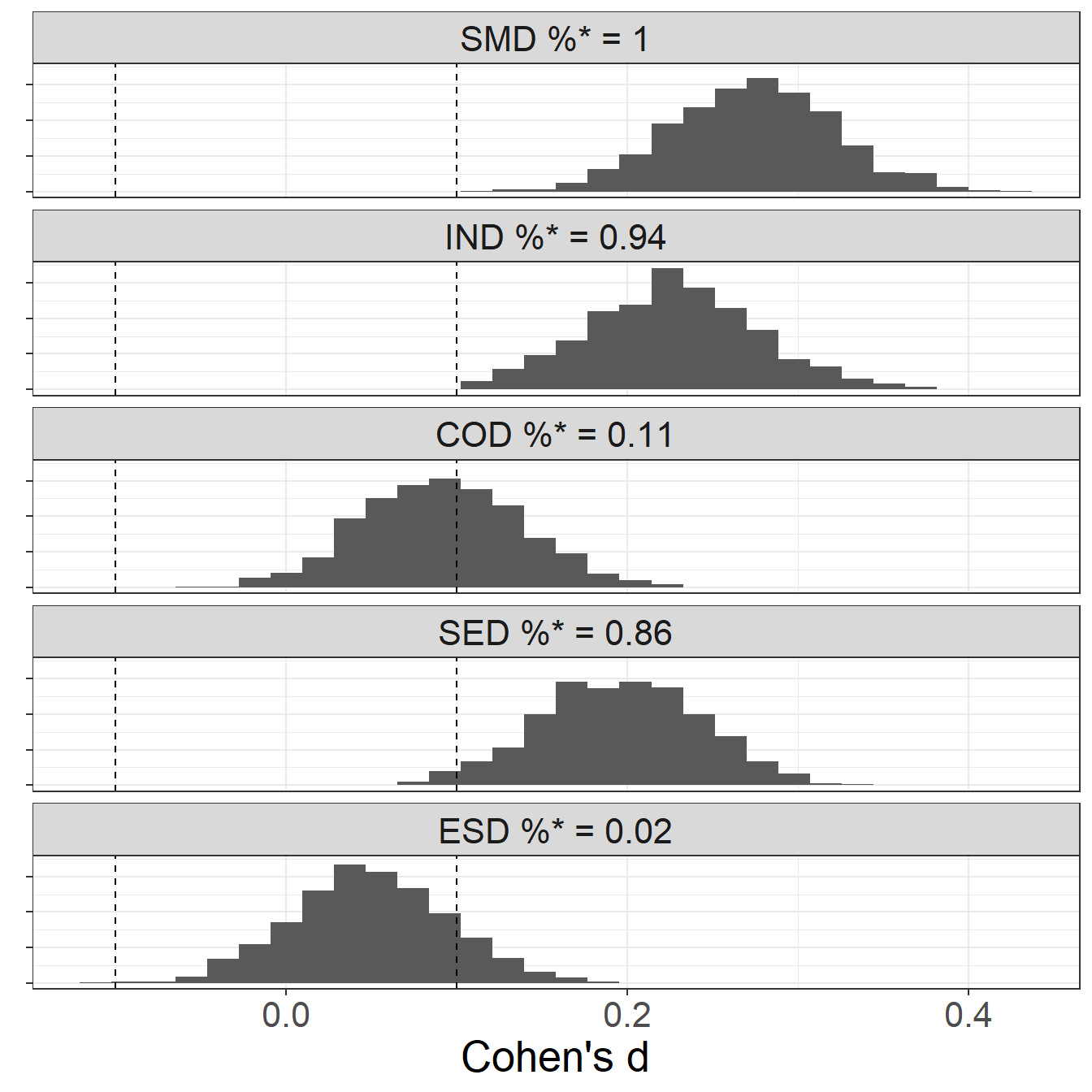
STUDY 2, matched samples